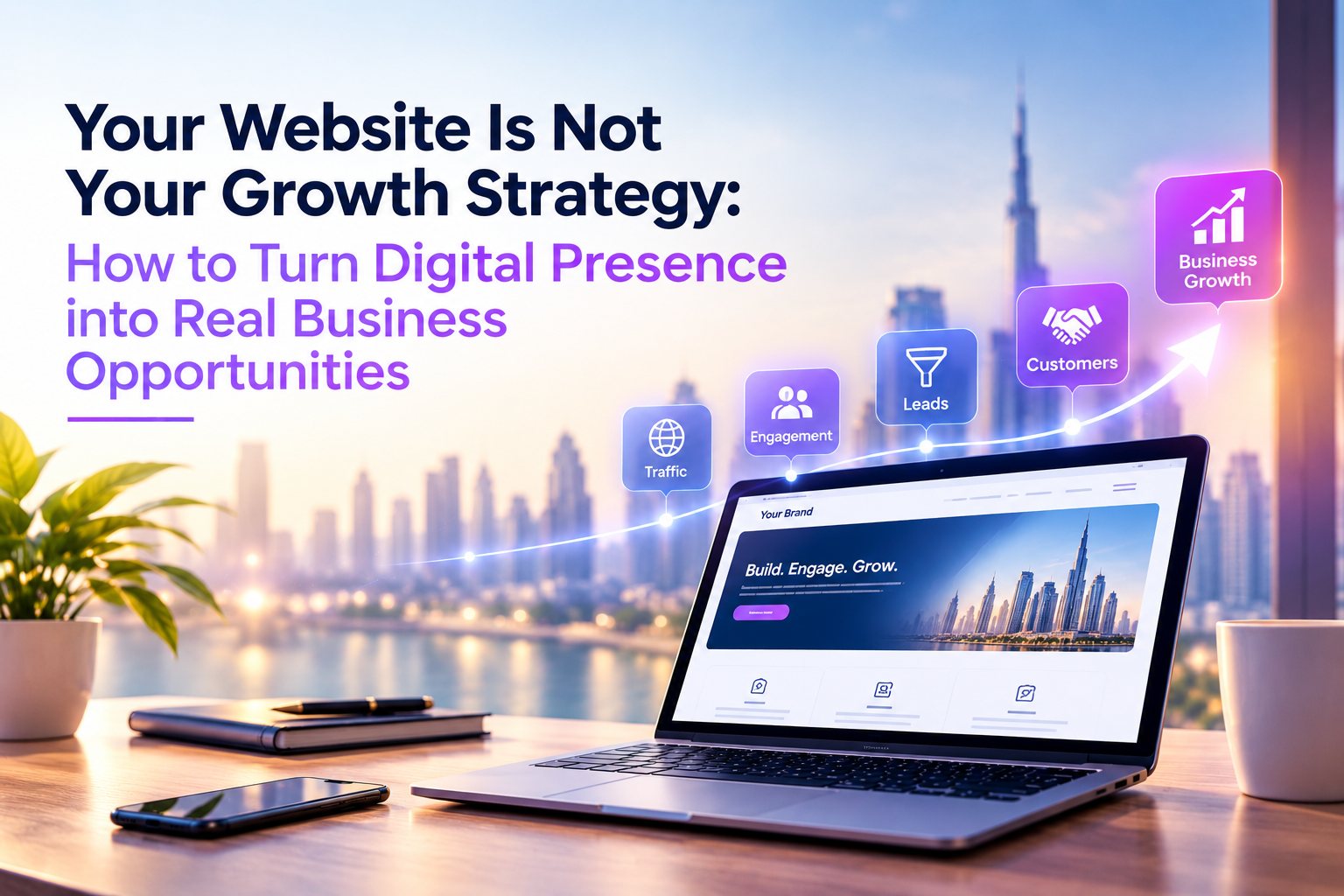
Introduction: Visibility Is Only the Beginning
In today’s competitive digital landscape, getting noticed online is no longer enough. Businesses can have thousands of social media followers, impressive website traffic, and regular content uploads without generating meaningful enquiries or sales.
The real challenge is turning that attention into action.
This is where strategic digital marketing makes a difference. Instead of focusing only on likes, impressions, and clicks, businesses need an approach that connects visibility with customer intent, trust, and conversions.
At Marcliq, the focus is on helping businesses build a stronger digital presence through thoughtful marketing strategies, creative content, search engine optimization, paid advertising, and website experiences designed around business objectives.
The goal is simple: make every digital touchpoint contribute to a bigger growth strategy.
1. Attract the Right Audience, Not Just More Visitors
A strong online presence is valuable, but it needs the right strategy behind it.
Imagine a business receiving hundreds of website visitors every month but generating very few enquiries. The problem might not be traffic. It could be a confusing website layout, an unclear service offering, weak calls to action, or a lack of customer trust.
Common reasons digital marketing fails to convert include:
- Unclear messaging: Visitors cannot immediately understand what the business offers.
- Poor website experience: Slow loading, difficult navigation, or mobile usability problems discourage potential customers.
- Unfocused targeting: Marketing campaigns reach people who are unlikely to need the service.
- Inconsistent branding: Different messages across platforms make the business appear less credible.
- Weak conversion paths: Visitors do not know what step to take next.
Businesses should evaluate the complete customer journey rather than focusing only on impressions, followers, or website traffic.
2. Build a Website That Works as a Business Asset
Your website should do more than display information. It should help potential customers understand your value, explore your services, and contact your business.
An effective business website needs:
Clear communication: Explain what you offer, who you serve, and how your solution addresses customer needs.
Simple navigation: Organize services, contact details, and important information so visitors can find them easily.
Mobile-friendly design: Ensure the website works smoothly across smartphones, tablets, and desktops.
Strategic calls to action: Use relevant prompts such as “Request a Consultation,” “Explore Our Services,” or “Get in Touch.”
Trust-building elements: Include genuine testimonials, relevant case studies, transparent service information, and accurate business details.
Website development and digital marketing should work together. Even a well-designed website may struggle to generate enquiries if its content, search visibility, and conversion journey are not planned properly.
3. SEO Should Attract the Right Audience, Not Just More Visitors
Search engine optimization helps businesses improve their visibility when people search for relevant products, services, or solutions.
However, effective SEO is not simply about placing keywords throughout a webpage. It requires an understanding of search intent, useful content, technical performance, and the questions potential customers are trying to answer.
A practical SEO strategy includes:
- Researching keywords that reflect customer needs and business goals.
- Creating helpful landing pages for individual services.
- Publishing original, informative blog content.
- Improving page titles, meta descriptions, headings, and internal links.
- Maintaining a technically accessible, mobile-friendly website.
- Monitoring organic traffic, relevant enquiries, and conversions.
For example, a business offering website development should not depend entirely on a broad keyword such as “web design.” It can also create helpful content around specific customer concerns, such as choosing a website platform, improving website performance, or understanding the cost of a business website.
This approach connects useful information with genuine customer intent.
4. AEO: Make Your Content Useful for Answer-Based Search
Answer Engine Optimization (AEO) focuses on making information clear, direct, and easy for search engines and AI-powered answer experiences to understand.
As people increasingly ask complete questions instead of searching with short keywords, businesses have an opportunity to create content that directly addresses those questions.
For stronger AEO, businesses should:
- Use descriptive headings that reflect real customer questions.
- Provide concise answers near the beginning of relevant sections.
- Explain industry terms in simple language.
- Add FAQs that address genuine customer concerns.
- Support claims with accurate information and reliable sources when appropriate.
- Use structured data where it accurately represents the content on the page.
For example, instead of publishing only a general article about SEO, answer a question such as “How long does SEO take to show results?”
Answer: SEO timelines vary depending on competition, website condition, content quality, and the effectiveness of optimization. Meaningful improvements can take several months, and results are not guaranteed.
This direct-answer format helps readers understand the topic quickly while giving search systems clearly organized information to interpret. AEO can support discoverability, but no format guarantees inclusion in an AI-generated answer.
5. Social Media Marketing Should Build Trust Before Asking for a Sale
Social media is more than a place to publish promotional graphics. It gives businesses an opportunity to demonstrate expertise, communicate their personality, answer questions, and build relationships with potential customers.
A balanced social media strategy can include:
Educational content: Explain common problems, useful tips, and industry developments.
Behind-the-scenes content: Show the people, processes, and thinking behind your business.
Customer-focused content: Address frequently asked questions and common objections.
Brand storytelling: Communicate your values, approach, and the problems you aim to solve.
Conversion-focused content: Direct interested audiences toward relevant service pages, enquiries, or consultations.
Consistency matters, but posting more content is not automatically better. Each post should have a purpose, whether that is increasing awareness, building credibility, encouraging engagement, or generating qualified enquiries.
6. Paid Advertising Needs a Conversion Plan
Paid advertising can help businesses reach specific audiences and test offers, but campaign performance depends on more than the advertising platform.
Before launching a campaign, businesses should define:
- The audience they want to reach.
- The offer or service they want to promote.
- The landing page visitors will see.
- The action that counts as a conversion.
- The budget and performance indicators they will monitor.
For example, an advertisement promoting a consultation should direct users to a relevant page with a clear explanation of the service and a simple enquiry form. Sending every visitor to a generic homepage may create unnecessary friction.
Businesses should also track lead quality, conversion rates, and cost per qualified lead instead of judging campaigns solely by clicks or impressions.
Paid advertising works best when targeting, messaging, landing pages, and follow-up processes are aligned.
7. Connect Every Digital Marketing Channel to One Strategy
One of the biggest opportunities for businesses is to stop treating each marketing activity as a separate task.
SEO can attract people actively researching a solution. Blog content can answer their questions. Social media can reinforce brand familiarity. Paid advertising can reach selected audiences. A well-designed website can help convert interest into enquiries.
When these channels support one another, businesses can create a more consistent customer experience.
Marcliq brings together digital services such as website development, SEO, social media management, content marketing, paid advertising, branding, and lead generation to help businesses build a coordinated online presence.
The right combination depends on the business model, target audience, available budget, and growth objectives. There is no single marketing mix that works equally well for every company.
8. Measure Business Outcomes, Not Just Marketing Activity
A digital marketing report should explain what the work is achieving and where improvements are needed.
Useful metrics include:
Marketing Area | What to Measure |
SEO | Organic visibility, relevant traffic, and organic enquiries |
Website | Conversion rate, user engagement, and form submissions |
Social media | Relevant engagement, profile visits, and website referrals |
Paid advertising | Cost per lead, conversion rate, and lead quality |
Content marketing | Search visibility, useful engagement, and assisted conversions |
Lead generation | Qualified leads, follow-up rates, and sales opportunities |
Metrics should be interpreted together. For instance, a campaign may generate inexpensive leads but still perform poorly if those leads are not relevant to the business.
Regular analysis helps identify which activities deserve further investment and which need adjustment.
Frequently Asked Questions About Digital Marketing
What is a digital marketing strategy?
A digital marketing strategy is a planned approach to reaching a target audience through online channels such as search engines, websites, social media, content, and paid advertising. It defines business goals, target customers, marketing activities, and the metrics used to evaluate performance.
How can digital marketing help a business generate more leads?
Digital marketing can generate leads by improving search visibility, attracting relevant audiences, communicating a clear value proposition, and providing simple ways for potential customers to enquire. Results depend on the offer, audience, competition, website experience, and follow-up process.
What is the difference between SEO and AEO?
SEO focuses on improving a website’s visibility in search results and attracting relevant organic traffic. AEO focuses on structuring useful information so that search engines and answer-based systems can understand and potentially surface direct answers. Both benefit from accurate, helpful, well-organized content.
Is a website enough to grow an online business?
A website is an important foundation, but it may not generate consistent results without visibility, relevant content, a clear conversion journey, and an effective marketing strategy. SEO, social media, paid advertising, and other channels can help connect the website with the right audience.
How long does digital marketing take to deliver results?
Timelines vary by channel. Paid advertising can generate initial traffic quickly, while SEO and organic brand-building generally require sustained effort. Actual results depend on competition, budget, execution, market demand, and the quality of the customer journey.
How should a business choose digital marketing services?
A business should start by identifying its main challenge, such as low search visibility, weak website conversions, inconsistent social media activity, or insufficient qualified leads. It can then prioritize services that address those issues and measure progress against clear objectives.
Conclusion: Turn Digital Effort into a Clearer Growth Strategy
Digital growth does not come from being present on every platform or publishing content without a plan. It comes from understanding your audience, communicating your value, creating useful experiences, and continuously improving the path from discovery to enquiry.
When website development, SEO, AEO-focused content, social media, paid advertising, and lead generation work toward shared business goals, digital marketing becomes more measurable and purposeful.
Marcliq helps businesses build a stronger digital foundation through strategic marketing and creative solutions designed around their goals.
Ready to improve your online presence and create a more focused digital marketing strategy? Visit Marcliq to explore the services that can support your next stage of growth.