In today’s competitive digital landscape, simply having a website or social media account is not enough. Businesses need to be visible in the right places, at the right time, and in front of the right audience.
A strong digital visibility strategy helps your business increase online presence, attract potential customers, build trust, and generate consistent leads. Whether you are a startup, local business, eCommerce brand, or established company, a well-planned digital strategy can help you grow online.
In this guide, we’ll explain how to build a complete digital visibility strategy for your business.
What Is Digital Visibility?
Digital visibility refers to how easily people can find and recognize your business across online platforms.
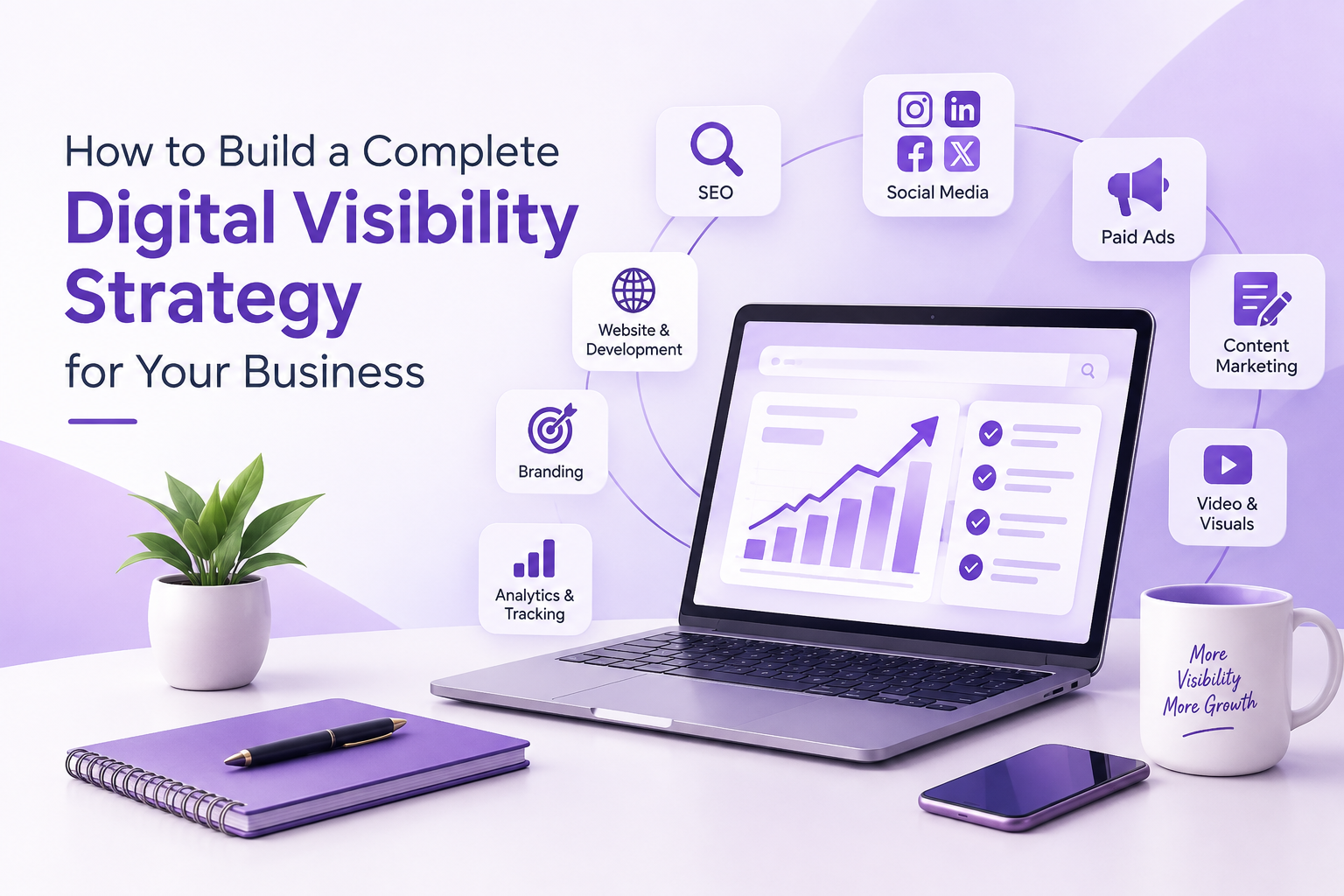
Your digital visibility can include:
- Search engine results
- Your business website
- Google Business Profile
- Social media platforms
- Online directories
- Blog content
- Video platforms
- Paid advertising
- Customer reviews
- AI and answer-based search platforms
The goal is not simply to appear online. The goal is to make your business discoverable, credible, and memorable to potential customers.
Why Is Digital Visibility Important for Your Business?
Customers often research a company online before making a purchase or contacting a business. If your brand is difficult to find, potential customers may choose a competitor instead.
A strong digital visibility strategy can help you:
- Increase brand awareness
- Improve search engine visibility
- Generate more website traffic
- Attract qualified leads
- Build customer trust
- Strengthen your online reputation
- Increase social media engagement
- Support long-term business growth
1. Define Your Target Audience
Before starting any digital marketing activity, understand who you want to reach.
Identify:
- Age group
- Location
- Industry or profession
- Interests
- Problems and challenges
- Buying behavior
- Search behavior
- Preferred online platforms
For example, a B2B software company may focus on LinkedIn and Google search, while a fashion brand may benefit more from Instagram, short-form videos, influencer marketing, and visual search.
Your strategy should be built around your audience rather than simply following every digital trend.
2. Build a Strong Website
Your website is one of the most important parts of your digital presence.
A professional website should be:
- Mobile-friendly
- Fast-loading
- Easy to navigate
- Secure
- SEO-friendly
- Visually professional
- Clear about your products or services
- Designed with strong calls to action
Your website should quickly answer three important questions:
Who are you?
What do you offer?
Why should customers choose you?
Create dedicated service or product pages instead of putting everything on one page. This can also help search engines understand what your business offers.
3. Create an SEO Strategy
Search Engine Optimization (SEO) helps your website appear when people search for products, services, or information related to your business.
Start with keyword research and identify:
- Primary keywords
- Long-tail keywords
- Local keywords
- Commercial keywords
- Informational keywords
- Question-based searches
Then optimize your website’s:
- Page titles
- Meta descriptions
- Headings
- URLs
- Content
- Images and alt text
- Internal links
- Technical structure
SEO is a long-term strategy. Instead of focusing only on rankings, create useful content that answers the questions your potential customers are actually searching for.
4. Create High-Quality Content
Content marketing plays an important role in improving digital visibility.
Create content around the problems, questions, and interests of your target audience.
You can use:
- Blog posts
- Guides
- Case studies
- Videos
- Infographics
- Social media posts
- Reels
- FAQs
- Ebooks
- Webinars
For example, instead of constantly promoting your service, a digital marketing agency could create content such as:
“How to Improve Your Website’s Google Visibility”
“SEO vs Google Ads: What’s the Difference?”
“How Much Does Website Development Cost?”
Helpful content can attract people before they are ready to buy and gradually build trust with your brand.
5. Strengthen Your Social Media Presence
Social media helps businesses stay connected with their audience and increase brand recognition.
Choose platforms based on where your audience spends time.
Your strategy may include:
- Educational posts
- Behind-the-scenes content
- Customer stories
- Product demonstrations
- Short-form videos
- Industry insights
- Testimonials
- Company updates
- Thought leadership
Consistency is more important than simply posting frequently.
Create a content calendar and maintain a recognizable brand style across your social platforms.
6. Optimize Your Google Business Profile
For businesses serving specific locations, local visibility is extremely important.
A properly optimized Google Business Profile can help customers discover your business through local searches and Google Maps.
Keep your profile updated with:
- Correct business information
- Business categories
- Website link
- Phone number
- Opening hours
- Photos
- Services
- Regular updates
- Customer reviews
Encourage genuine customers to leave reviews and respond professionally to feedback.
7. Build Your Online Reputation
Your online reputation can influence whether potential customers trust your business.
Monitor:
- Google reviews
- Social media comments
- Customer feedback
- Online mentions
- Industry directories
- Brand searches
Respond to customer feedback professionally and use positive customer experiences as part of your content strategy.
Testimonials and case studies can also demonstrate real-world results and strengthen credibility.
8. Use Paid Advertising Strategically
Organic visibility takes time. Paid advertising can help businesses reach relevant audiences more quickly.
Depending on your goals, you can use:
- Google Ads
- Meta Ads
- LinkedIn Ads
- YouTube Ads
- Remarketing campaigns
Don’t run ads without a clear objective.
Your campaign could focus on:
Awareness → Traffic → Leads → Conversion → Retention
Create dedicated landing pages for important campaigns and track results carefully.
9. Focus on Local SEO
If your business serves a particular city or region, local SEO should be part of your digital visibility strategy.
Use relevant location-based keywords naturally across your website.
For example:
- Digital marketing agency in Dubai
- Web development company in Delhi
- SEO services in Chandigarh
- Digital marketing services in India
Create useful location-specific pages and content rather than simply adding city names repeatedly.
10. Prepare Your Brand for AI and Answer-Based Search
Search behavior is changing. People increasingly ask questions through AI-powered tools and answer engines.
Businesses should create content that clearly answers specific questions.
Use:
- Clear headings
- Frequently asked questions
- Concise answers
- Well-structured content
- Original insights
- Authoritative information
- Relevant examples
This approach can improve your chances of being understood and referenced across modern search experiences.
11. Build Authority Through Backlinks and Partnerships
Your website’s visibility can also benefit from relevant third-party websites mentioning or linking to your business.
Consider:
- Industry publications
- Business directories
- Guest contributions
- Partnerships
- Digital PR
- Expert interviews
- Podcasts
- Industry communities
Focus on relevance and quality rather than trying to collect as many links as possible.
12. Track Your Digital Marketing Performance
You cannot improve what you don’t measure.
Track important metrics such as:
- Organic traffic
- Keyword visibility
- Website conversions
- Leads generated
- Social engagement
- Advertising performance
- Cost per lead
- Conversion rate
- Customer acquisition cost
Use analytics and reporting tools to understand which channels are generating meaningful business results.
A Simple Digital Visibility Strategy Framework
You can organize your strategy into five stages:
- Discover
Research your audience, competitors, keywords, and market. - Build
Create a strong website, brand identity, content system, and social presence. - Promote
Use SEO, social media, paid advertising, content marketing, and partnerships. - Measure
Track traffic, leads, engagement, rankings, and conversions. - Improve
Analyze the data and continuously optimize your strategy.
Common Digital Visibility Mistakes to Avoid
Many businesses make the mistake of trying to do everything at once.
Avoid:
- Posting without a strategy
- Ignoring SEO
- Having an outdated website
- Targeting the wrong audience
- Buying low-quality backlinks
- Running ads without tracking conversions
- Using the same content everywhere
- Ignoring customer reviews
- Focusing only on follower counts
- Expecting immediate SEO results
Digital visibility is a continuous process. Your strategy should evolve as your audience, competitors, platforms, and search behavior change.
Final Thoughts
Building a complete digital visibility strategy requires more than just creating social media posts or optimizing a few website pages. It requires a coordinated approach involving your website, SEO, content, social media, local search, paid advertising, reputation management, and analytics.
The most effective strategy is one that connects all these channels and moves potential customers from discovering your brand to trusting it and eventually becoming customers.
If you want to improve your business’s online presence, start by understanding your audience, build a strong digital foundation, create valuable content, and measure your results consistently.
Ready to improve your online visibility? Marcliq can help your business build, grow, and strengthen its digital presence with website development, SEO, social media marketing, content creation, paid advertising, and branding solutions.