Introduction
In today’s competitive online marketplace, being visible is no longer enough to guarantee business success. Thousands of brands compete for attention through search engines, social media platforms, paid advertisements, and content marketing. Yet, only a portion of these brands successfully turn online attention into meaningful customer relationships.
The real challenge is not simply attracting visitors. It is giving people enough confidence to choose your business over its competitors.
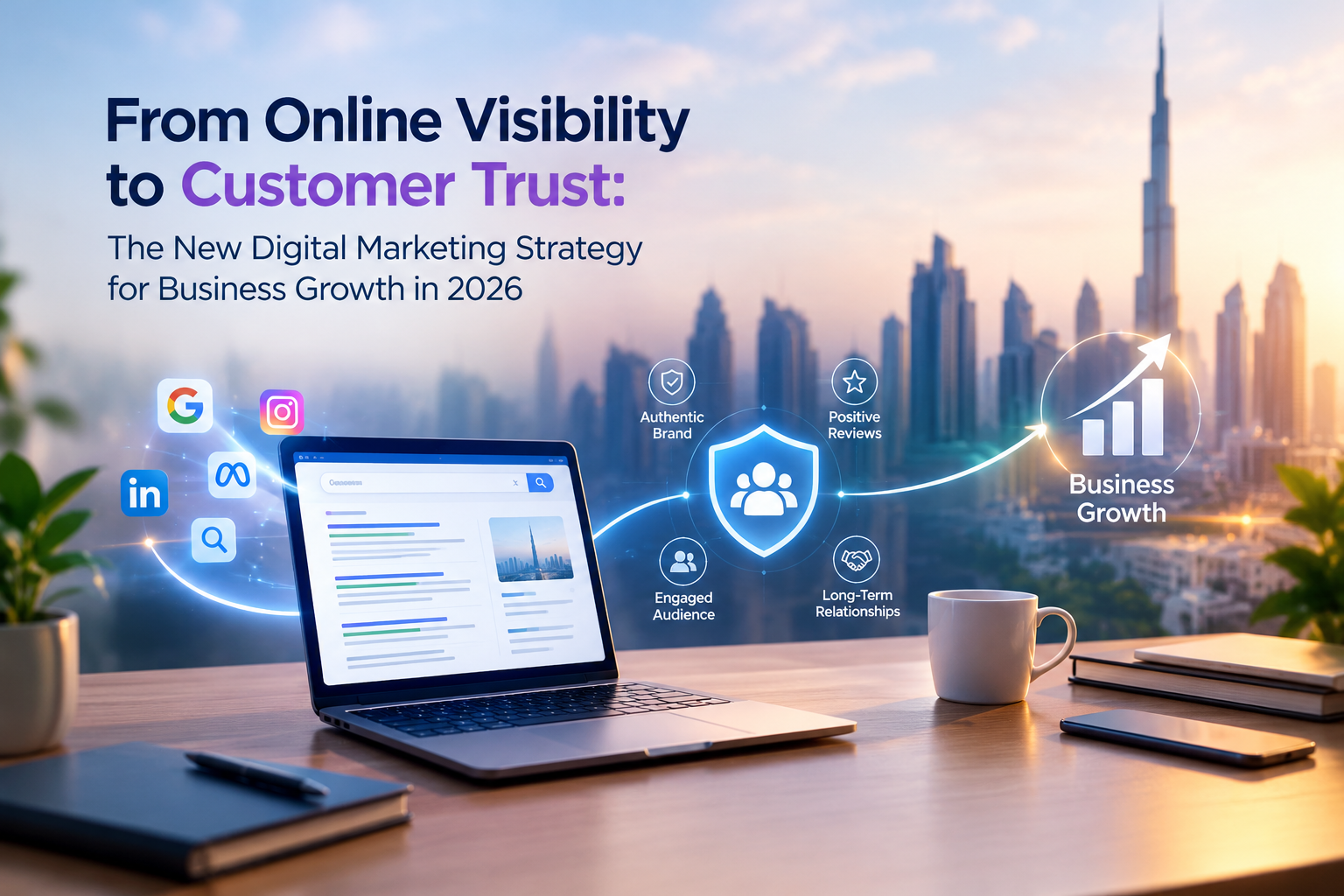
A well-planned digital marketing strategy for business growth connects visibility with credibility, engagement with trust, and website traffic with conversions. Businesses that understand this connection can build stronger customer relationships and create more sustainable growth.
At Marcliq, we believe digital growth starts with understanding what customers need, how they make decisions, and what encourages them to take the next step.
1. Visibility Is Only the Beginning of Digital Growth
Imagine a potential customer discovers your business through Google, visits your website, and explores your social media profiles. However, the website provides little useful information, the messaging is inconsistent, and there is no clear next step.
Even if your marketing successfully attracts visitors, the opportunity may be lost.
This is why businesses need to look beyond impressions, clicks, and follower counts. Effective digital marketing connects every customer touchpoint to a clear business objective.
To improve your online presence:
- Create useful content that answers customer questions.
- Maintain consistent branding across digital platforms.
- Make your website easy to navigate.
- Display clear service information and contact details.
- Use relevant calls to action to guide visitors.
The objective is to make it easier for potential customers to understand your value and confidently engage with your brand.
2. Build Customer Trust Before Asking for a Sale
Imagine a potential customer discovers your business through Google, visits your website, and explores your social media profiles. However, the website provides little useful information, the messaging is inconsistent, and there is no clear next step.
Even if your marketing successfully attracts visitors, the opportunity may be lost.
This is why businesses need to look beyond impressions, clicks, and follower counts. Effective digital marketing connects every customer touchpoint to a clear business objective.
To improve your online presence:
- Create useful content that answers customer questions.
- Maintain consistent branding across digital platforms.
- Make your website easy to navigate.
- Display clear service information and contact details.
- Use relevant calls to action to guide visitors.
The objective is to make it easier for potential customers to understand your value and confidently engage with your brand.
3. Turn Search Intent Into Relevant Content
Search engine optimization is more effective when content addresses the reason behind a search rather than simply repeating keywords.
For example, someone searching for a digital marketing agency may be comparing service providers. Another person searching for ways to improve website conversions may be looking for practical solutions before hiring an agency.
These users have different needs and require different types of content.
A strong SEO content strategy should include:
Educational content: Explain industry concepts, common challenges, and practical solutions.
Comparison content: Help readers evaluate approaches, services, and available options.
Service-focused content: Explain what your business offers, who it helps, and how customers can get started.
Problem-solving content: Address specific questions that potential customers ask before making a decision.
By matching content to search intent, businesses can attract more relevant visitors and create a better experience for potential customers.
4. Make Your Website Work as a Business Growth Tool
Your website should do more than introduce your company. It should guide visitors toward meaningful actions.
A website that generates business opportunities typically combines clear messaging, intuitive navigation, useful information, and strategically placed conversion points.
Consider these improvements:
- Clear headlines: Explain your value proposition immediately.
- Mobile-friendly design: Ensure pages work smoothly across different screen sizes.
- Fast-loading pages: Reduce unnecessary elements that slow down the experience.
- Focused landing pages: Align each page with a specific service or campaign.
- Simple enquiry forms: Request only the information needed to begin a conversation.
- Visible calls to action: Make it easy to request a consultation, submit an enquiry, or contact your team.
Website design and digital marketing should work together. Even a successful advertising campaign can underperform when visitors arrive at a confusing or unconvincing landing page.
5. Connect SEO, Social Media, and Paid Advertising
Many businesses manage SEO, social media, and paid advertising as separate activities. However, these channels can deliver greater value when they support a shared strategy.
SEO helps people discover your business while researching solutions. Social media gives your brand opportunities to demonstrate expertise, communicate with audiences, and remain visible. Paid advertising can introduce targeted offers to relevant audiences and generate enquiries more quickly.
For example, a business might publish an SEO-focused blog, turn its key insights into LinkedIn and Instagram content, and promote a relevant service through a targeted advertising campaign.
Each channel serves a different purpose, but the overall message remains consistent.
An integrated digital marketing strategy helps businesses create a more connected customer journey instead of relying on isolated marketing activities.
6. Use Data to Understand What Actually Drives Growth
Marketing performance should be measured against business goals rather than vanity metrics alone.
A campaign generating thousands of clicks may still produce limited business value if those visitors are unlikely to become customers. Meanwhile, a smaller campaign may deliver better results when it attracts people with a genuine interest in the service.
Businesses should regularly evaluate:
- Website traffic from relevant sources.
- Organic search visibility and keyword performance.
- Enquiry and lead conversion rates.
- Cost per lead from paid campaigns.
- Landing-page performance.
- Quality of leads generated.
- Customer acquisition costs and return on marketing investment.
Tracking these metrics helps identify which activities deserve further investment and which require improvement.
The goal is not to collect more data. It is to use the right data to make better marketing decisions.
7. Prepare Your Content for AI-Powered Search
The way people discover information online continues to evolve. Alongside traditional search engines, users increasingly encounter AI-generated summaries and conversational search experiences.
Businesses should therefore create content that is easy to understand, useful, and supported by clear information.
A practical approach includes:
- Answering specific customer questions directly.
- Using descriptive headings and logical content structure.
- Explaining services and industry terminology clearly.
- Publishing original insights and relevant examples.
- Maintaining accurate business information across digital platforms.
- Supporting factual claims with credible sources where appropriate.
These practices can support traditional SEO and improve the clarity of content used by AI-powered discovery systems. However, visibility in AI-generated answers is not guaranteed, and businesses should continue investing in a balanced search strategy.
8. Personalisation Makes Marketing More Relevant
Not every customer has the same priorities. Some want affordability, others value convenience, and some focus on expertise or long-term support.
Personalisation helps businesses communicate more relevant messages to different audience segments.
For example, a service-based company could create separate landing pages for startups, established businesses, and enterprises. Each page could explain the challenges, priorities, and solutions most relevant to that audience.
Marketing messages can also be adapted according to customer interests, previous interactions, and the stage of the buying journey, while respecting privacy and consent requirements.
Relevant communication helps reduce confusion and makes it easier for potential customers to identify the services that fit their needs.
9. Build a Consistent Brand Experience Across Every Channel
Customers may discover your business through Google, encounter a social media post, read a blog, and later visit your website before contacting you.
If every interaction communicates a different message, customers may struggle to understand what your brand represents.
A consistent brand experience includes:
- A recognisable visual identity.
- A clear and consistent tone of voice.
- Aligned service descriptions.
- Useful and relevant content.
- Consistent contact information.
- A smooth transition from discovery to enquiry.
Brand consistency is not about publishing identical content everywhere. It is about communicating the same core value through formats suited to each platform.
How Marcliq Helps Businesses Turn Digital Efforts Into Growth
Customers may discover your business through Google, encounter a social media post, read a blog, and later visit your website before contacting you.
If every interaction communicates a different message, customers may struggle to understand what your brand represents.
A consistent brand experience includes:
- A recognisable visual identity.
- A clear and consistent tone of voice.
- Aligned service descriptions.
- Useful and relevant content.
- Consistent contact information.
- A smooth transition from discovery to enquiry.
Brand consistency is not about publishing identical content everywhere. It is about communicating the same core value through formats suited to each platform.
Conclusion: Make Every Digital Interaction Count
Digital marketing success is not defined by how frequently a business appears online. It depends on how effectively that visibility creates interest, builds trust, and encourages meaningful action.
Businesses that combine search-focused content, user-friendly websites, consistent branding, targeted advertising, and data-driven decisions can build a stronger foundation for long-term growth.
The next step is to evaluate your current digital presence, identify gaps in the customer journey, and prioritise improvements that align with measurable business objectives.
Marcliq helps businesses move beyond online visibility to build a more strategic, customer-focused digital presence.
Ready to strengthen your digital strategy? Visit https://marcliq.com/ to explore our services and discover opportunities to grow your business online.
Frequently Asked Questions (FAQs)
1. What is a digital marketing strategy for business growth?
A digital marketing strategy is a structured plan for using online channels such as SEO, social media, paid advertising, content marketing, and websites to reach target audiences and achieve business objectives.
2. Why is customer trust important in digital marketing?
Customer trust can influence whether people engage with a brand, submit an enquiry, or make a purchase. Consistent messaging, useful content, transparent information, and credible customer feedback can help strengthen trust.
3. How does SEO help businesses attract customers?
SEO helps improve a website’s visibility for relevant search queries. By creating useful content and optimising website pages, businesses can attract people actively looking for information, products, or services.
4. Can social media marketing generate business leads?
Yes. Social media can support lead generation through relevant content, audience targeting, service promotions, direct engagement, and clear calls to action. Results depend on the strategy, audience, offer, and execution.
5. How can Marcliq help improve my online presence?
Marcliq offers digital solutions such as website development, SEO, social media marketing, paid advertising, content marketing, branding, and lead generation to help businesses strengthen their online presence and work toward measurable growth.