Introduction: Visibility Is Only the Beginning
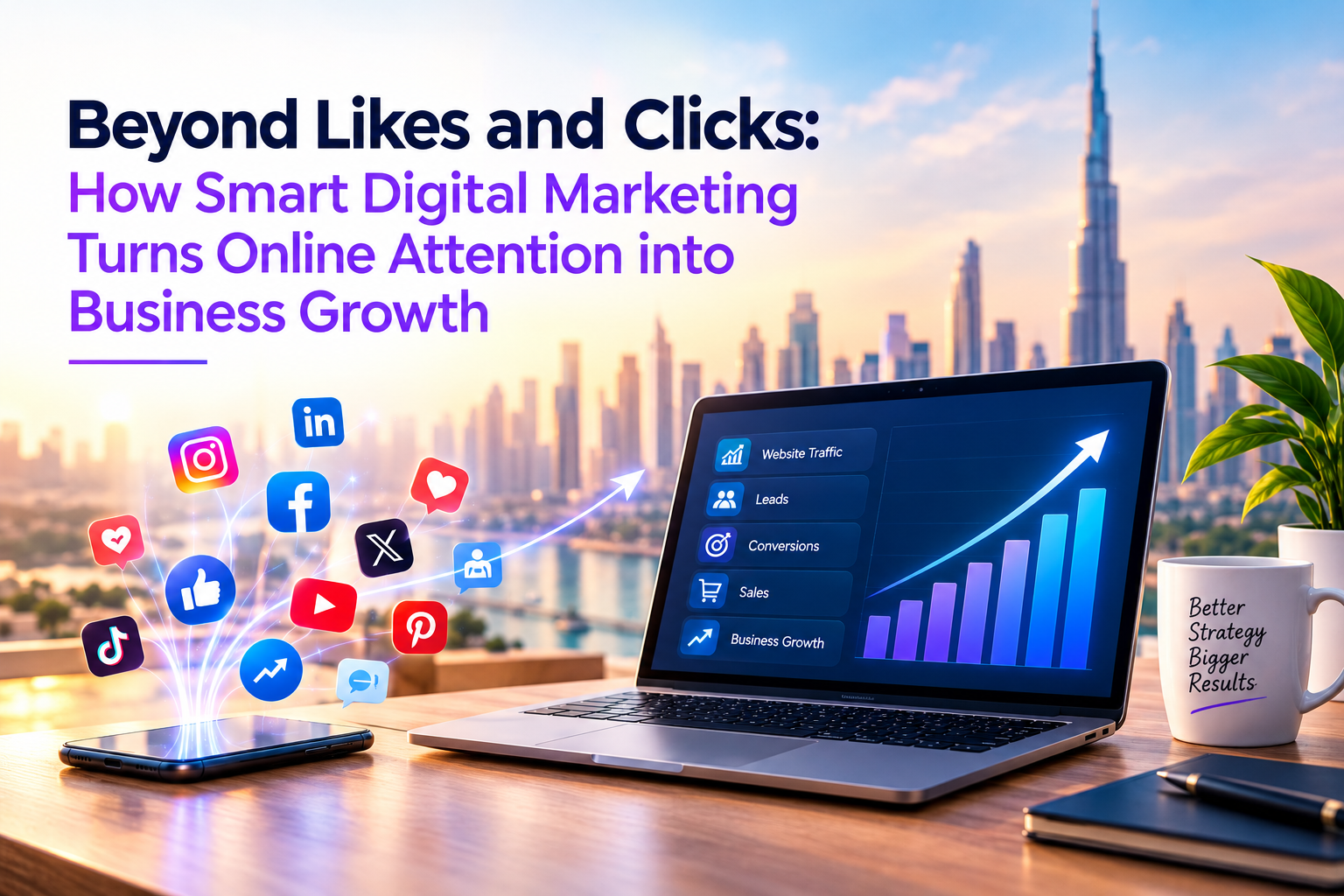
In today’s competitive digital landscape, getting noticed online is no longer enough. Businesses can have thousands of social media followers, impressive website traffic, and regular content uploads without generating meaningful enquiries or sales.
The real challenge is turning that attention into action.
This is where strategic digital marketing makes a difference. Instead of focusing only on likes, impressions, and clicks, businesses need an approach that connects visibility with customer intent, trust, and conversions.
At Marcliq, the focus is on helping businesses build a stronger digital presence through thoughtful marketing strategies, creative content, search engine optimization, paid advertising, and website experiences designed around business objectives.
The goal is simple: make every digital touchpoint contribute to a bigger growth strategy.
1. Attract the Right Audience, Not Just More Visitors
Many businesses measure marketing success through follower counts, website visits, and post engagement. Although these metrics help evaluate performance, they do not always explain whether marketing activities are contributing to business growth.
For example, a website may attract thousands of visitors but receive very few enquiries. Similarly, a social media post may receive hundreds of likes without reaching potential customers who are ready to purchase.
Businesses should evaluate performance through metrics such as:
- Qualified leads generated through marketing campaigns.
- Conversion rates across landing pages and websites.
- Cost per lead and customer acquisition cost.
- Organic search visibility for relevant commercial keywords.
- Enquiries, bookings, and sales attributed to marketing activities.
- Customer retention and repeat business.
The key takeaway: Digital marketing should not simply attract attention. It should attract the right attention and create a clear path from discovery to conversion.
2. Search Engine Optimization Is About Understanding Customer Intent
Search engine optimization (SEO) is more than adding keywords to website pages or publishing blogs regularly. Effective SEO begins with understanding what people are searching for and why they are searching for it.
A person searching for “what is digital marketing” may be looking for information, while someone searching for “digital marketing agency for small businesses” may be comparing service providers.
These searches reflect different stages of the customer journey.
A strong SEO strategy addresses these differences by creating useful content for informational, commercial, and transactional searches.
Businesses can strengthen their SEO efforts by:
- Researching keywords based on customer needs and search intent.
- Creating original, informative, and well-structured website content.
- Improving website speed, mobile usability, and navigation.
- Optimizing title tags, meta descriptions, headings, and internal links.
- Building relevant service pages that answer customer questions.
- Keeping business information accurate and consistent across relevant listings.
For businesses targeting competitive markets, SEO can help establish long-term organic visibility and attract visitors who are actively looking for relevant solutions.
3. Answer Engine Optimization: Make Your Brand Easier to Understand
Search engine optimization (SEO) is more than adding keywords to website pages or publishing blogs regularly. Effective SEO begins with understanding what people are searching for and why they are searching for it.
A person searching for “what is digital marketing” may be looking for information, while someone searching for “digital marketing agency for small businesses” may be comparing service providers.
These searches reflect different stages of the customer journey.
A strong SEO strategy addresses these differences by creating useful content for informational, commercial, and transactional searches.
Businesses can strengthen their SEO efforts by:
- Researching keywords based on customer needs and search intent.
- Creating original, informative, and well-structured website content.
- Improving website speed, mobile usability, and navigation.
- Optimizing title tags, meta descriptions, headings, and internal links.
- Building relevant service pages that answer customer questions.
- Keeping business information accurate and consistent across relevant listings.
For businesses targeting competitive markets, SEO can help establish long-term organic visibility and attract visitors who are actively looking for relevant solutions.
4. Social Media Marketing Should Build Relationships, Not Just Reach
Social media platforms give businesses opportunities to communicate with potential customers, demonstrate expertise, and build brand recognition.
However, posting frequently without a clear content strategy can make marketing activities repetitive and difficult to measure.
A more effective approach is to give every content category a purpose.
- Educational content: Answer common questions and explain industry concepts.
- Problem-solving content: Show how your products or services address specific challenges.
- Brand-building content: Communicate your values, expertise, process, and personality.
- Trust-building content: Share genuine customer feedback, case studies, and project insights.
- Conversion-focused content: Explain service benefits and provide clear next steps.
Short-form videos, carousels, infographics, and informative posts can all contribute to this strategy when they match the audience and platform.
The objective is not to publish everywhere without direction. It is to create content that gives people a reason to remember your brand and consider your services.
5. Your Website Is More Than an Online Business Card
Your website often plays a central role in turning marketing traffic into enquiries. Even a successful advertising or social media campaign can underperform when visitors land on a confusing, slow, or poorly structured website.
A conversion-focused website should make three things immediately clear:
- What does the business offer?
- How can the offer help the visitor?
- What should the visitor do next?
Businesses can improve their website experience through clear service descriptions, easy navigation, mobile-friendly layouts, visible calls to action, useful FAQs, and straightforward enquiry forms.
Landing pages should also match the message of the campaign that directs visitors to them. If an advertisement promotes SEO services, the landing page should explain those services rather than forcing visitors to search the entire website.
Tracking form submissions, calls, bookings, and other meaningful actions helps businesses identify which pages are supporting their marketing goals.
6. Paid Advertising Works Best When Strategy Comes First
Paid advertising can help businesses reach targeted audiences and test marketing messages more quickly than organic methods alone. However, spending more money does not automatically produce better results.
Successful campaigns require a clear objective, relevant audience targeting, persuasive creative assets, and a suitable destination page.
Before launching a campaign, businesses should establish:
- The specific product, service, or offer being promoted.
- The audience most likely to benefit from it.
- The campaign objective, such as qualified leads or purchases.
- The available budget and acceptable acquisition costs.
- The landing page and conversion tracking setup.
- The process for following up with incoming enquiries.
Campaign performance should be evaluated using actual business outcomes rather than clicks alone. Regular testing of creative formats, audience segments, messaging, and landing pages can help identify opportunities for improvement.
Paid advertising and organic marketing can also complement each other. SEO builds long-term discoverability, social media supports audience engagement, and paid campaigns can provide additional reach for specific offers.
7. AI Can Make Digital Marketing More Efficient, but Strategy Still Matters
Artificial intelligence is changing how marketing teams research topics, analyze performance, develop content ideas, and produce creative assets.
When used thoughtfully, AI tools can help businesses accelerate repetitive tasks and explore different approaches to communication.
Practical applications include:
- Identifying content topics based on customer questions.
- Generating initial outlines for blogs and website pages.
- Exploring creative directions for advertising campaigns.
- Summarizing marketing performance data.
- Developing variations of headlines and calls to action.
- Supporting personalized customer communication.
However, automated content still requires human review. Generic information, inaccurate claims, repetitive articles, and content without genuine expertise can weaken a brand’s credibility.
The strongest approach combines AI-assisted efficiency with human judgment, original insights, brand consistency, and fact-checking.
Technology should support a better marketing strategy, not replace the thinking behind it.
8. Connect Every Channel to Build a Consistent Customer Journey
One of the biggest missed opportunities in digital marketing occurs when each channel operates independently.
A business may publish blogs for SEO, create social media posts, run paid advertisements, and maintain a website without connecting these activities to a common objective.
An integrated strategy creates a more consistent experience.
For example, a business can publish a detailed blog answering a customer problem, share key insights through social media, promote a relevant offer through paid advertising, and direct interested visitors to a dedicated landing page.
The business can then measure which channels generate qualified enquiries and use those insights to improve future campaigns.
This approach helps businesses understand how different marketing activities work together instead of judging every channel in isolation.
9. How to Build a Practical Digital Marketing Strategy
A digital marketing strategy does not have to begin with a large budget or dozens of campaigns. It should begin with clear priorities.
Step 1: Define your business objective. Decide whether the immediate priority is brand awareness, qualified leads, online sales, bookings, or customer retention.
Step 2: Understand your target audience. Identify their needs, concerns, buying preferences, and the questions they ask before choosing a provider.
Step 3: Audit your current digital presence. Review your website, search visibility, social media activity, existing content, and campaign performance.
Step 4: Choose the right channels. Select SEO, social media, paid advertising, content marketing, or other channels according to your audience and objectives.
Step 5: Create useful, consistent content. Develop content that answers real questions, demonstrates expertise, and supports different stages of the customer journey.
Step 6: Track meaningful results. Monitor qualified leads, conversions, acquisition costs, and other metrics that connect marketing activity with business objectives.
Step 7: Improve through testing. Review the data, identify weaknesses, test changes, and refine the strategy over time.
A focused plan with clear measurements is often more useful than running multiple disconnected campaigns.
Why Choose Marcliq for Digital Marketing?
Businesses need more than isolated marketing activities. They need a digital strategy that connects brand visibility, audience engagement, website performance, and lead generation.
Marcliq provides digital marketing solutions designed to help businesses strengthen their online presence and communicate more effectively with their target audiences.
Its service offerings include:
- Search Engine Optimization: Improve website structure, content relevance, and opportunities for organic visibility.
- Social Media Marketing: Develop platform-specific content and strategies that support brand awareness and audience engagement.
- Paid Advertising: Plan and manage campaigns around defined marketing objectives.
- Content Marketing: Create informative blogs, website copy, and digital content that addresses customer needs.
- Website Development and Redesign: Build or improve websites with attention to usability, performance, and conversion opportunities.
- Lead Generation: Support the process of attracting relevant prospects and encouraging meaningful enquiries.
- Creative and AI-Assisted Content: Explore engaging visual content and efficient creative production workflows.
The right combination of services depends on a business’s industry, audience, objectives, and current digital performance.
Marcliq’s approach centres on helping businesses move beyond simply being present online and toward building a more purposeful digital growth strategy.
Frequently Asked Questions About Digital Marketing
1. What is digital marketing, and why is it important?
Digital marketing is the promotion of products, services, and brands through online channels such as search engines, websites, social media, email, and paid advertising. It helps businesses reach relevant audiences, communicate their value, generate enquiries, and measure marketing performance.
2. Which digital marketing strategy is best for business growth?
The most suitable strategy depends on the business objective. SEO can support long-term organic visibility, social media can strengthen audience engagement, paid advertising can expand targeted reach, and conversion-focused websites can help turn visitors into enquiries. Combining relevant channels often creates a more consistent customer journey.
3. What is the difference between SEO and AEO?
SEO focuses on improving a website’s visibility in search engine results. AEO focuses on making information clear and accessible for question-based searches and answer-driven experiences, including AI-powered search tools. Both benefit from relevant content, clear structure, accuracy, and a strong understanding of user intent.
4. How long does digital marketing take to produce results?
The timeline varies by channel, competition, budget, website condition, and campaign quality. Paid campaigns can generate initial data relatively quickly, while SEO generally requires sustained work over time. Consistent measurement is necessary to understand performance and make informed improvements.
5. How can a business generate quality leads online?
A business can improve lead generation by identifying its target audience, creating useful content, targeting relevant searches, using appropriate advertising campaigns, building clear landing pages, and providing simple enquiry options. Following up promptly and measuring lead quality are also important.
6. Is digital marketing suitable for small businesses?
Yes. Small businesses can use digital marketing to reach relevant audiences, establish credibility, and compete for attention without relying entirely on traditional advertising. Starting with a clear objective and a manageable set of channels can help make marketing efforts more focused.
7. How can businesses measure digital marketing success?
Businesses can measure performance through qualified enquiries, conversion rates, customer acquisition costs, organic traffic, sales, return on advertising spend, and customer retention. The most useful metrics are those connected to the business’s specific objectives.
Conclusion: Turn Digital Presence into a Clear Growth Strategy
Digital marketing is most valuable when every activity has a purpose. A blog should answer a real question, a social media post should provide a reason to engage, an advertisement should communicate a relevant offer, and a website should make the next step easy to understand.
Businesses that connect these activities can build a more consistent customer journey and make better decisions about where to invest their marketing resources.
For brands looking to strengthen their online presence, the next step is not necessarily to do more marketing. It is to make existing marketing efforts more connected, measurable, and relevant.
Ready to build a smarter digital presence? Explore how Marcliq can help your business strengthen its online visibility, connect with the right audience, and work toward sustainable digital growth.
Visit https://marcliq.com/ to explore Marcliq’s digital marketing solutions.