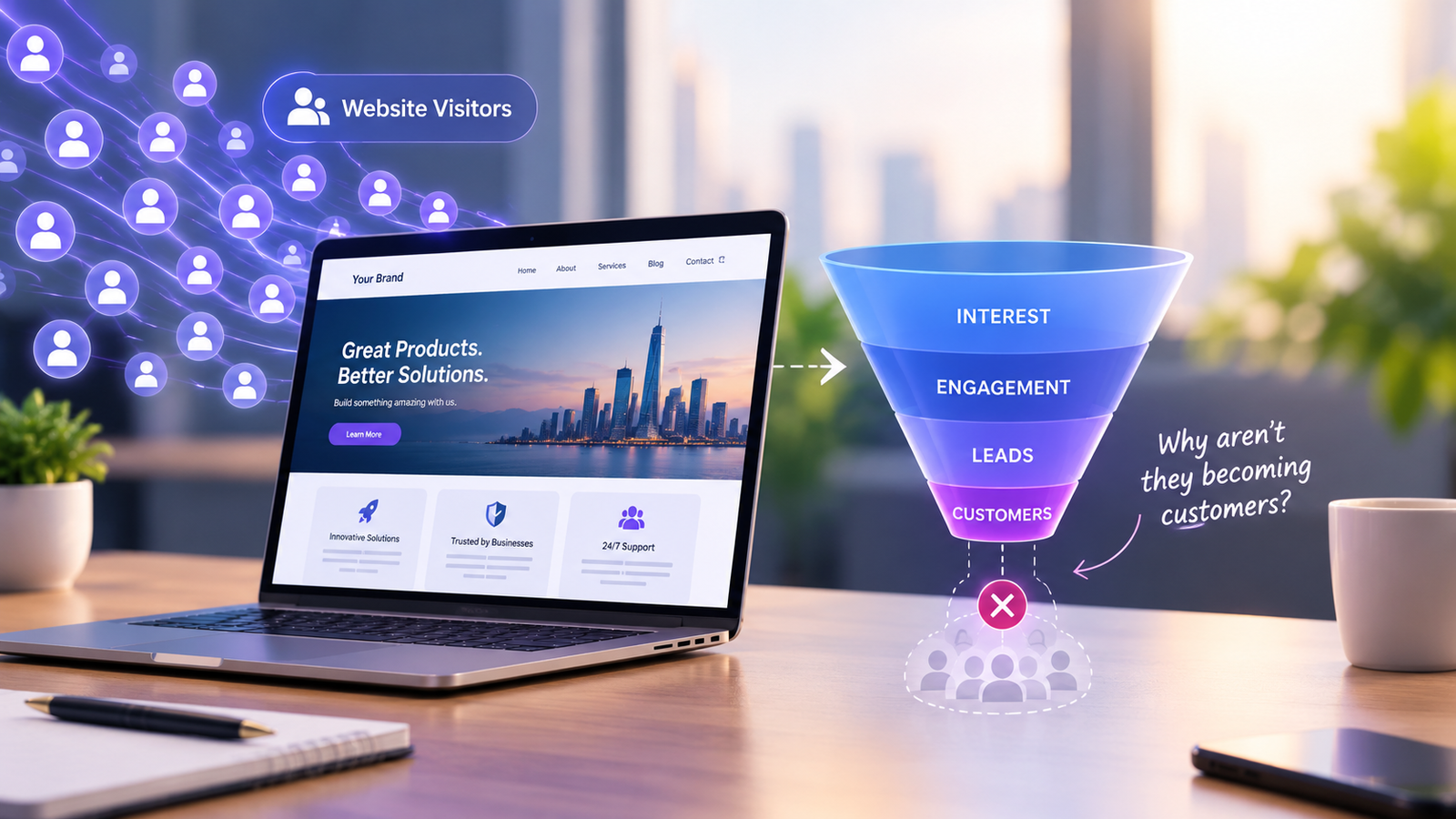
Introduction: When Website Traffic Doesn’t Tell the Whole Story
Imagine investing in a beautiful website, publishing blogs regularly, running paid advertisements, and posting consistently on social media. Your analytics show visitors are arriving, but your inbox remains quiet. There are few inquiries, limited bookings, and hardly any new customers.
This is a common challenge for businesses investing in digital marketing.
The problem may not be your website traffic. It could be the journey visitors experience after reaching your website. If your content doesn’t answer their questions, your services aren’t clearly explained, or your website makes contacting you difficult, potential customers may leave without taking action.
At Marcliq, we believe digital growth should focus on more than visibility. A well-planned digital marketing strategy connects the right audience with the right message and gives them a clear reason to take the next step.
1. Attract the Right Audience, Not Just More Visitors
More traffic does not automatically mean more business.
A website may receive thousands of visitors who have little interest in its services. For example, a web development company might attract people searching for free website templates when its primary goal is to generate inquiries from businesses looking for professional website development.
Both audiences are interested in websites, but their intentions are different.
To attract potential customers:
- Research keywords that reflect commercial and transactional intent.
- Create service pages that address specific customer needs.
- Develop content around the problems your business solves.
- Target relevant locations and industries when appropriate.
- Review which traffic sources generate meaningful inquiries.
The goal is not simply to increase website traffic. It is to attract visitors who are more likely to become customers.
2. Make Your Website Explain Your Value Within Seconds
Visitors should not have to search through multiple pages to understand what your business offers.
Your homepage and service pages should quickly communicate three things: what you do, who you help, and why someone should choose you.
A strong website experience includes:
- A clear and benefit-focused headline.
- Simple navigation and well-organized service information.
- Relevant visuals that support your message.
- Trust signals, testimonials, or genuine examples of your work.
- Visible contact options and clear calls to action.
Your website design should support your business goals rather than simply look attractive. A professional, mobile-friendly website can make it easier for visitors to understand your services and decide whether to contact you.
3. Create Content That Answers Real Customer Questions
Publishing content only to maintain a posting schedule can lead to missed opportunities.
Effective content marketing starts with understanding what potential customers want to know before making a decision.
Consider a business searching for digital marketing services. It may want to understand how SEO works, what affects advertising costs, how leads are tracked, or how to evaluate marketing performance.
Content that answers these questions can help your business become a useful resource during the customer’s research process.
Build your content strategy around:
- Frequently asked questions from customers.
- Industry-specific challenges and practical solutions.
- Comparisons that help customers make informed decisions.
- Case studies supported by genuine results.
- Educational blogs that connect naturally to your services.
This approach can support SEO, strengthen brand credibility, and help potential customers move from researching a problem to considering your business.
4. Connect SEO With Conversion Optimization
Publishing content only to maintain a posting schedule can lead to missed opportunities.
Effective content marketing starts with understanding what potential customers want to know before making a decision.
Consider a business searching for digital marketing services. It may want to understand how SEO works, what affects advertising costs, how leads are tracked, or how to evaluate marketing performance.
Content that answers these questions can help your business become a useful resource during the customer’s research process.
Build your content strategy around:
- Frequently asked questions from customers.
- Industry-specific challenges and practical solutions.
- Comparisons that help customers make informed decisions.
- Case studies supported by genuine results.
- Educational blogs that connect naturally to your services.
This approach can support SEO, strengthen brand credibility, and help potential customers move from researching a problem to considering your business.
5. Use Social Media to Build Trust Before the First Inquiry
Social media can introduce your business to new audiences, but its value extends beyond likes, shares, and follower counts.
Potential customers often want to understand how a business thinks, communicates, and solves problems before contacting it.
Use your social media channels to share:
- Helpful tips and industry insights.
- Short educational videos.
- Behind-the-scenes glimpses of your process.
- Project highlights and authentic customer feedback.
- Answers to common questions.
- Clear explanations of your services.
Consistency matters, but relevance matters just as much. Your content should give people a reason to remember your brand and return when they need your services.
6. Build a Follow-Up Process for Interested Visitors
Not every visitor is ready to purchase during their first visit.
Some may compare providers, discuss budgets internally, or wait until the timing is right. If your marketing strategy focuses only on immediate conversions, you may overlook these future opportunities.
A practical lead generation process can include:
- Simple inquiry forms that request only essential information.
- Clear confirmation messages after a form submission.
- Timely follow-ups with interested prospects.
- Helpful email communication where appropriate and consented to.
- Retargeting campaigns that respect applicable privacy requirements.
- A system for tracking inquiries from initial contact to conversion.
A structured follow-up process helps businesses manage leads more effectively and understand which marketing activities contribute to actual opportunities.
7. Measure Business Results Instead of Vanity Metrics
Digital marketing becomes more useful when performance is connected to business objectives.
Instead of reviewing only impressions, followers, or total sessions, track metrics that explain what happens after someone discovers your brand.
Metric | What It Helps You Understand |
Qualified leads | Whether you attract relevant prospects |
Conversion rate | How effectively visitors take a desired action |
Cost per lead | How much you spend to generate an inquiry |
Lead-to-customer rate | How many inquiries become customers |
Organic search performance | How people discover your website through search |
Return on ad spend | How advertising revenue compares with advertising costs, where measurable |
The right metrics depend on your business model, sales cycle, and marketing objectives. Reviewing them regularly can help you identify weaknesses, allocate budgets more thoughtfully, and improve future campaigns.
8. Prepare Your Digital Presence for AI-Powered Search
The way people discover businesses continues to evolve. Alongside traditional search engines, users increasingly interact with AI-powered search experiences to explore questions, compare options, and understand services.
Businesses should make their online information clear, useful, and consistent.
Consider these practices:
- Answer relevant customer questions directly.
- Use descriptive headings and concise explanations.
- Maintain accurate business information across important platforms.
- Publish original content based on genuine expertise.
- Organize service pages so their purpose is easy to understand.
- Use structured data where appropriate and valid.
- Build credibility through useful resources and authentic business information.
These practices can improve clarity for both users and search systems, although no specific ranking or AI citation is guaranteed.
A future-ready strategy should combine traditional SEO fundamentals with answer-focused content and a trustworthy online presence.
Why a Connected Digital Marketing Strategy Matters
Website design, SEO, content marketing, social media, and paid advertising should not operate as disconnected activities.
When these channels work together, each can support the others. A blog can attract relevant search traffic, a service page can explain your offering, social media can reinforce credibility, and a well-designed contact process can help turn interest into an inquiry.
This is where a coordinated digital marketing strategy becomes valuable.
At Marcliq, we help businesses strengthen their digital presence through website development, SEO, social media marketing, paid advertising, content creation, branding, and lead generation. Our approach focuses on connecting digital activities with clear business objectives rather than treating every channel as a separate task.
Conclusion: Turn Digital Visibility Into Meaningful Growth
If your website attracts visitors but generates few inquiries, increasing your marketing budget may not be the first step. Start by understanding your audience, reviewing your website experience, improving your content, and measuring the actions that matter to your business.
Sustainable digital growth comes from making it easier for the right people to discover your brand, understand your value, and take the next step.
Your website should do more than exist online. Your content should do more than fill a calendar. And your marketing should do more than generate numbers on a dashboard.
Ready to build a digital presence that works toward your business goals?
Connect with Marcliq to explore digital marketing strategies designed around your brand, audience, and growth objectives.
Website: https://marcliq.com/
Frequently Asked Questions (FAQs)
- Why is my website getting traffic but no leads?
Your website may be attracting visitors with the wrong search intent, offering unclear service information, lacking strong calls to action, or creating friction in the inquiry process. Reviewing traffic quality and user experience can help identify the cause.
- How can I convert website visitors into customers?
Start by clarifying your value proposition, improving mobile usability, creating relevant landing pages, adding visible contact options, and tracking qualified inquiries. Follow up with interested prospects consistently.
- Does SEO help generate leads for businesses?
SEO can help businesses attract people actively searching for relevant products, services, and solutions. Its lead-generation potential depends on search intent, competition, website quality, and the effectiveness of the conversion process.
- What is the difference between website traffic and website conversions?
Website traffic measures visits to a website. Conversions measure desired actions, such as submitting an inquiry form, requesting a consultation, making a purchase, or booking a service.
- How does Marcliq help businesses improve their digital presence?
Marcliq offers digital marketing services including website development, SEO, social media marketing, paid advertising, content creation, branding, and lead generation to help businesses strengthen their online presence and pursue measurable growth.