Introduction
Getting more visitors to your website sounds like a successful marketing goal. But what happens when your website receives traffic without generating inquiries, consultations, or sales?
For many businesses, the real challenge is not simply attracting attention. It is attracting the right audience and giving those visitors a clear reason to take action.
In 2026, digital growth requires more than ranking on Google or publishing regular social media posts. Businesses need a connected strategy that combines search visibility, helpful content, user experience, audience targeting, and conversion optimization.
At Marcliq, the focus is on helping businesses build a stronger digital presence that supports measurable growth. Instead of treating every marketing channel separately, brands can create a connected customer journey that transforms online discovery into meaningful business opportunities.
1. Why Website Traffic Does Not Always Generate Leads
Many businesses approach digital marketing as a collection of separate tasks. They publish social media posts, invest in paid campaigns, update their website, and occasionally publish blogs.
The problem is not necessarily the individual activities. It is the lack of connection between them.
For example, a business may generate thousands of website visits but receive very few enquiries. Another business may attract engagement on social media without converting that attention into customers.
These situations often indicate gaps in the customer journey.
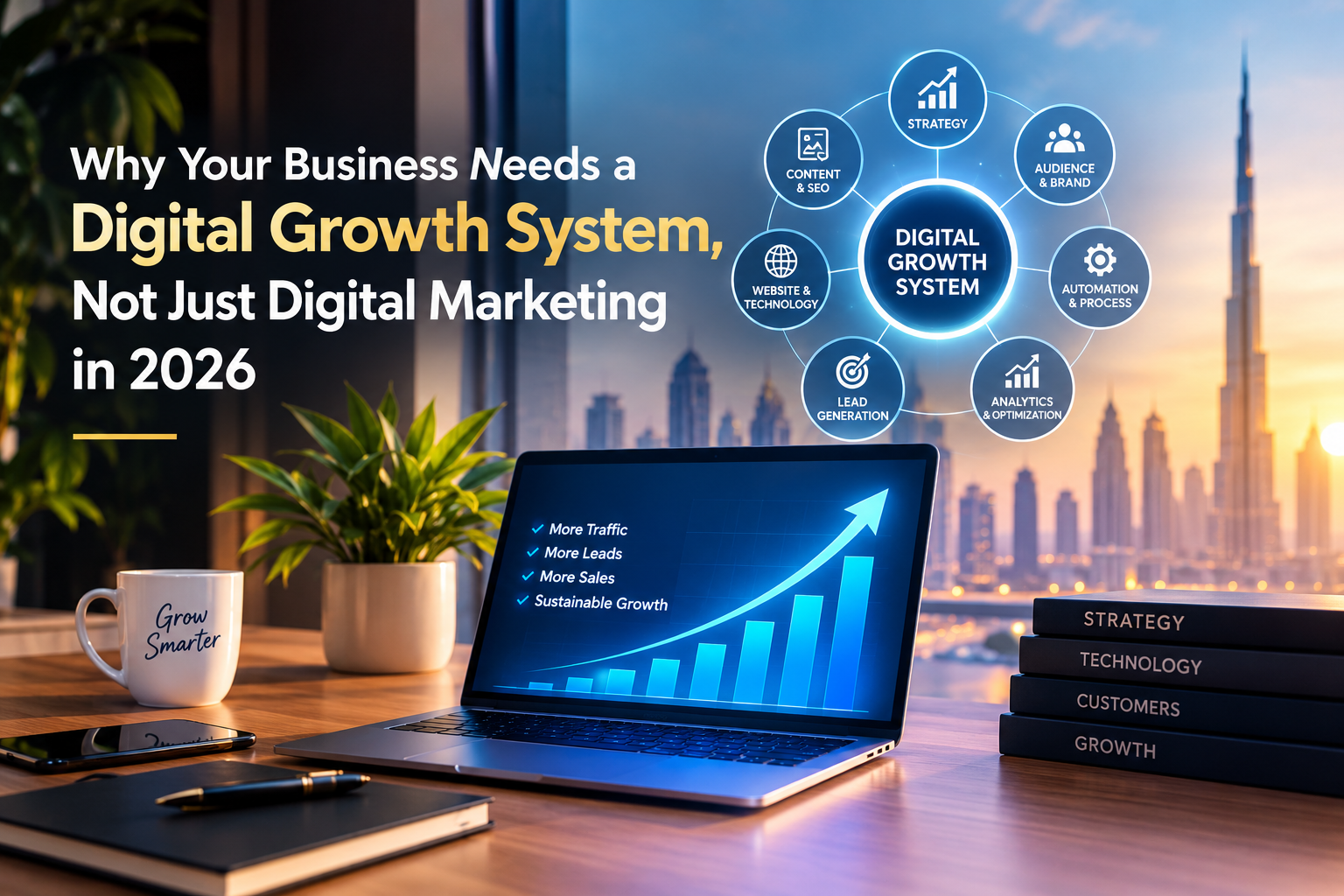
A more effective digital growth strategy connects each marketing activity to a clear business objective:
- SEO: Helps potential customers discover your business through relevant search queries.
- Content marketing: Answers customer questions and demonstrates expertise.
- Social media marketing: Builds brand awareness and encourages audience engagement.
- Paid advertising: Reaches relevant audiences and generates targeted traffic.
- Website optimization: Makes it easier for visitors to understand your services and enquire.
- Lead generation: Turns qualified interest into actionable business opportunities.
When these activities work together, businesses can make better use of their marketing budget and understand which channels contribute to their goals
2. Optimize for Search Engines and AI-Powered Answers
Search behaviour is evolving. Customers still use traditional search engines, but they increasingly encounter AI-generated summaries and conversational answers when researching products, services, and businesses.
This makes Answer Engine Optimization (AEO) an important consideration alongside traditional SEO.
SEO helps search engines discover, understand, and rank relevant content. AEO focuses on making content clear, useful, and easy for answer-driven platforms to interpret and potentially reference.
Businesses can strengthen their content by:
- Answering specific customer questions directly.
- Using descriptive headings and logical content structures.
- Including relevant FAQs on service and blog pages.
- Providing accurate, original information and practical examples.
- Maintaining consistent business details across trusted online platforms.
- Improving website usability, accessibility, and technical performance.
For example, instead of publishing a generic article about digital marketing, a Dubai-based agency could answer a specific question such as, “How can small businesses in Dubai generate qualified leads online?”
The second approach targets a clearer search intent and gives readers a more useful answer.
However, no SEO or AEO strategy can guarantee placement in Google rankings or AI-generated answers. The objective is to make your content more relevant, credible, and accessible.
3. Build Website Pages That Turn Visitors into Enquiries
Search behaviour is evolving. Customers still use traditional search engines, but they increasingly encounter AI-generated summaries and conversational answers when researching products, services, and businesses.
This makes Answer Engine Optimization (AEO) an important consideration alongside traditional SEO.
SEO helps search engines discover, understand, and rank relevant content. AEO focuses on making content clear, useful, and easy for answer-driven platforms to interpret and potentially reference.
Businesses can strengthen their content by:
- Answering specific customer questions directly.
- Using descriptive headings and logical content structures.
- Including relevant FAQs on service and blog pages.
- Providing accurate, original information and practical examples.
- Maintaining consistent business details across trusted online platforms.
- Improving website usability, accessibility, and technical performance.
For example, instead of publishing a generic article about digital marketing, a Dubai-based agency could answer a specific question such as, “How can small businesses in Dubai generate qualified leads online?”
The second approach targets a clearer search intent and gives readers a more useful answer.
However, no SEO or AEO strategy can guarantee placement in Google rankings or AI-generated answers. The objective is to make your content more relevant, credible, and accessible.
4. Use Content Marketing to Answer Real Customer Questions
Content marketing becomes more effective when it addresses the questions customers ask before making a purchase.
Instead of publishing articles simply to maintain a posting schedule, build content around customer concerns, decision-making factors, common mistakes, and practical solutions.
For example, a digital marketing agency could create content around questions such as:
- How much should a small business spend on digital marketing?
- Which digital marketing channels are suitable for a new business?
- How can a company improve the quality of its leads?
- What should businesses check before hiring an SEO agency?
- How can a website generate more enquiries without increasing advertising spend?
These topics support both SEO and AEO because they address clear search intent and provide opportunities to deliver direct, helpful answers.
A single well-researched topic can also support several content formats, including a detailed blog, LinkedIn post, Instagram carousel, short video, and email newsletter.
This approach creates consistency across channels while reducing the need to develop every piece of content from scratch.
5. Connect Paid Advertising with Lead Quality
Paid advertising can help businesses reach potential customers faster, but the number of clicks alone does not determine campaign success.
A campaign that generates many inexpensive leads may still deliver poor results if those leads are irrelevant, unresponsive, or outside the target market.
Businesses should evaluate advertising performance using metrics that reflect actual objectives:
- Cost per qualified lead.
- Landing page conversion rate.
- Lead-to-customer conversion rate.
- Cost per acquisition.
- Revenue generated from marketing campaigns, where measurable.
The campaign should also match the audience’s intent. Someone searching for a specific service may need a different message from someone discovering a brand for the first time on social media.
Connecting advertising creatives, audience targeting, landing pages, and follow-up processes helps create a more consistent experience.
Before increasing an advertising budget, businesses should identify what is working, where prospects are dropping off, and whether the leads being generated are relevant to their services.
6. Measure Business Outcomes, Not Just Online Activity
Likes, impressions, followers, and website visits can help explain marketing performance, but they do not tell the complete story.
A digital growth system should connect marketing activities to measurable business outcomes.
For example, a monthly performance review can examine:
Marketing Area | What to Measure |
SEO | Relevant organic traffic, search visibility, and organic enquiries |
AEO | Content quality, answer relevance, and referral visibility where measurable |
Social Media | Relevant engagement, website visits, and enquiries |
Paid Advertising | Cost per qualified lead and conversion rate |
Website | Form submissions, calls, and landing page conversions |
Lead Generation | Lead quality, follow-up rate, and sales conversion |
Accurate tracking is essential. Analytics tools, advertising pixels, conversion events, and a well-maintained lead management process can help businesses understand how potential customers move from discovery to enquiry.
The goal is not to measure everything equally. It is to identify the metrics that matter most to your business and use them to make informed decisions.
7. How Marcliq Helps Businesses Build a Connected Digital Presence
At Marcliq, digital growth starts with understanding the business, its audience, and its objectives.
Our services can support different stages of the customer journey, helping businesses create a more consistent online presence.
- Website Development and Design: Create user-friendly websites and landing pages that communicate your services clearly.
- SEO and Content Marketing: Develop search-focused content and improve website visibility for relevant queries.
- Social Media Marketing: Build a consistent brand presence through platform-specific content and audience engagement.
- Google and Meta Ads: Plan and manage targeted advertising campaigns based on business objectives.
- Lead Generation: Help businesses attract relevant prospects and improve the journey from interest to enquiry.
- AI Video and Creative Content: Develop engaging visual content to support campaigns, promotions, and brand communication.
The right combination depends on your industry, target audience, budget, and current marketing performance. Rather than treating every service as a separate activity, businesses should build a strategy in which each channel supports a clear objective.
Frequently Asked Questions (FAQs)
1. What is a digital growth strategy?
A digital growth strategy is a structured plan that combines online channels such as SEO, content marketing, social media, paid advertising, and website optimization to achieve business goals, including qualified leads, customer acquisition, and revenue growth.
2. What is the difference between SEO and AEO?
SEO focuses on improving a website’s visibility in traditional search results. AEO focuses on structuring clear, relevant information so answer-driven platforms can understand and potentially use it to respond to user questions. Both approaches can complement each other.
3. How can a business generate more qualified leads online?
Businesses can improve lead generation by targeting relevant audiences, creating useful content, optimizing landing pages, using clear calls to action, tracking conversions, and following up with enquiries promptly.
4. Is social media marketing enough to grow a business?
Social media can support brand awareness, engagement, and customer acquisition. However, many businesses benefit from combining it with SEO, a conversion-focused website, paid advertising where appropriate, and a reliable lead follow-up process.
5. How long does digital marketing take to show results?
Timelines vary by channel, competition, budget, website condition, and business objectives. Paid campaigns may generate initial enquiries relatively quickly, while organic SEO typically requires sustained work over several months. Results should be reviewed against realistic, measurable goals.
6. Why should a business work with a digital marketing agency?
A digital marketing agency can help businesses plan campaigns, develop content, improve online visibility, manage advertising, and measure performance. The value depends on the agency’s expertise, communication, strategic approach, and ability to align marketing activities with business objectives.
Conclusion: Make Every Digital Channel Work Towards One Goal
Digital growth is not about being present on every platform or publishing content every day. It is about making the right channels work together to attract relevant audiences, build trust, and encourage meaningful action.
When SEO, AEO, content, social media, advertising, and website optimization support the same business objectives, companies can make more informed marketing decisions and build a stronger foundation for sustainable growth.
Ready to build a smarter digital growth strategy for your business?
Connect with Marcliq to explore website development, SEO, social media marketing, paid advertising, and lead generation solutions tailored to your business goals.
Marcliq — Grow Digitally. Scale Smartly.
Website: https://marcliq.com/